Types of yoga
Two ways to practise.
Same underlying approach — strength, mobility, breath — with two different paths depending on what each body needs.
Functional yoga
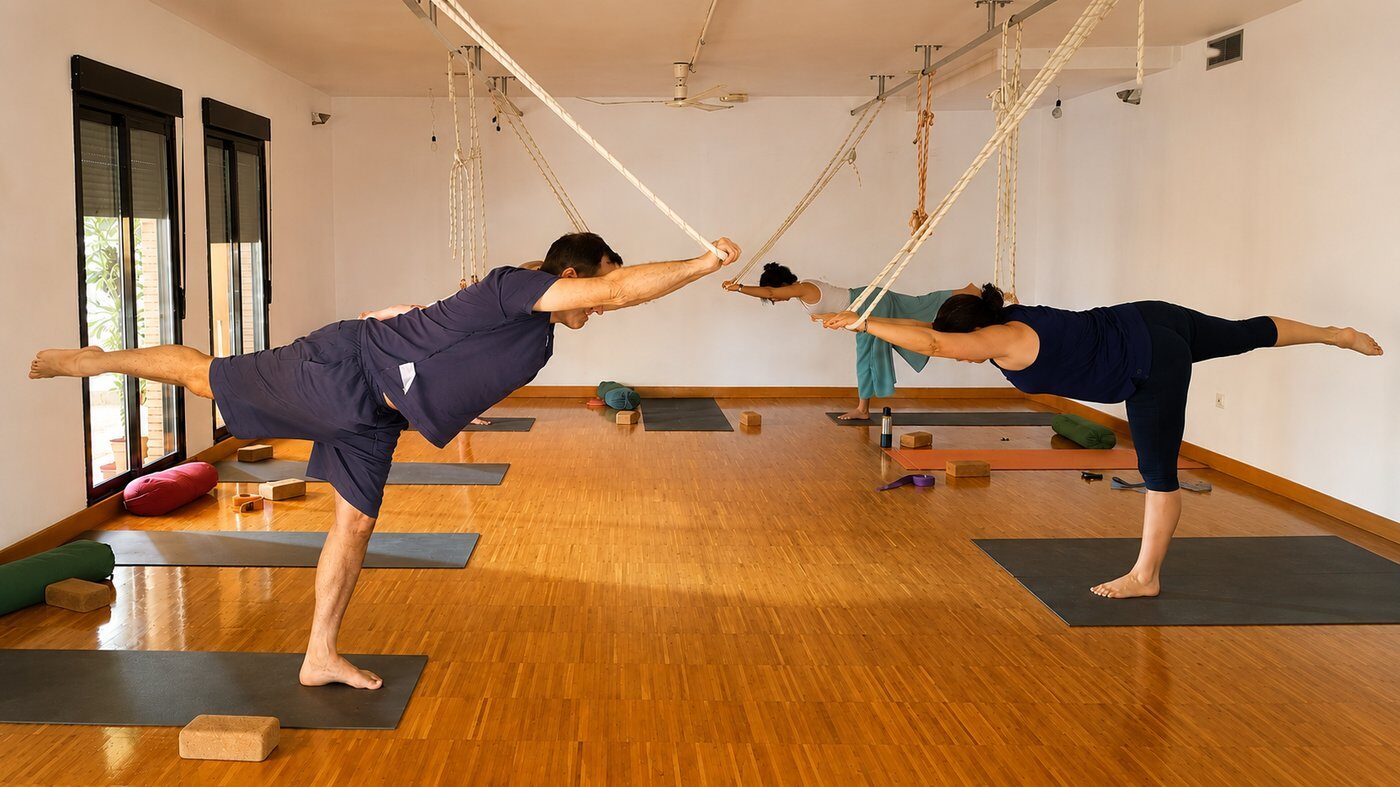
Monday 14:30–15:45 · Thursday 19:00–20:15Combines traditional hatha yoga postures with functional training principles. It doesn't chase the posture for its own sake: it aims for the body to move better in real life, with strength, stability and a controlled range of motion.
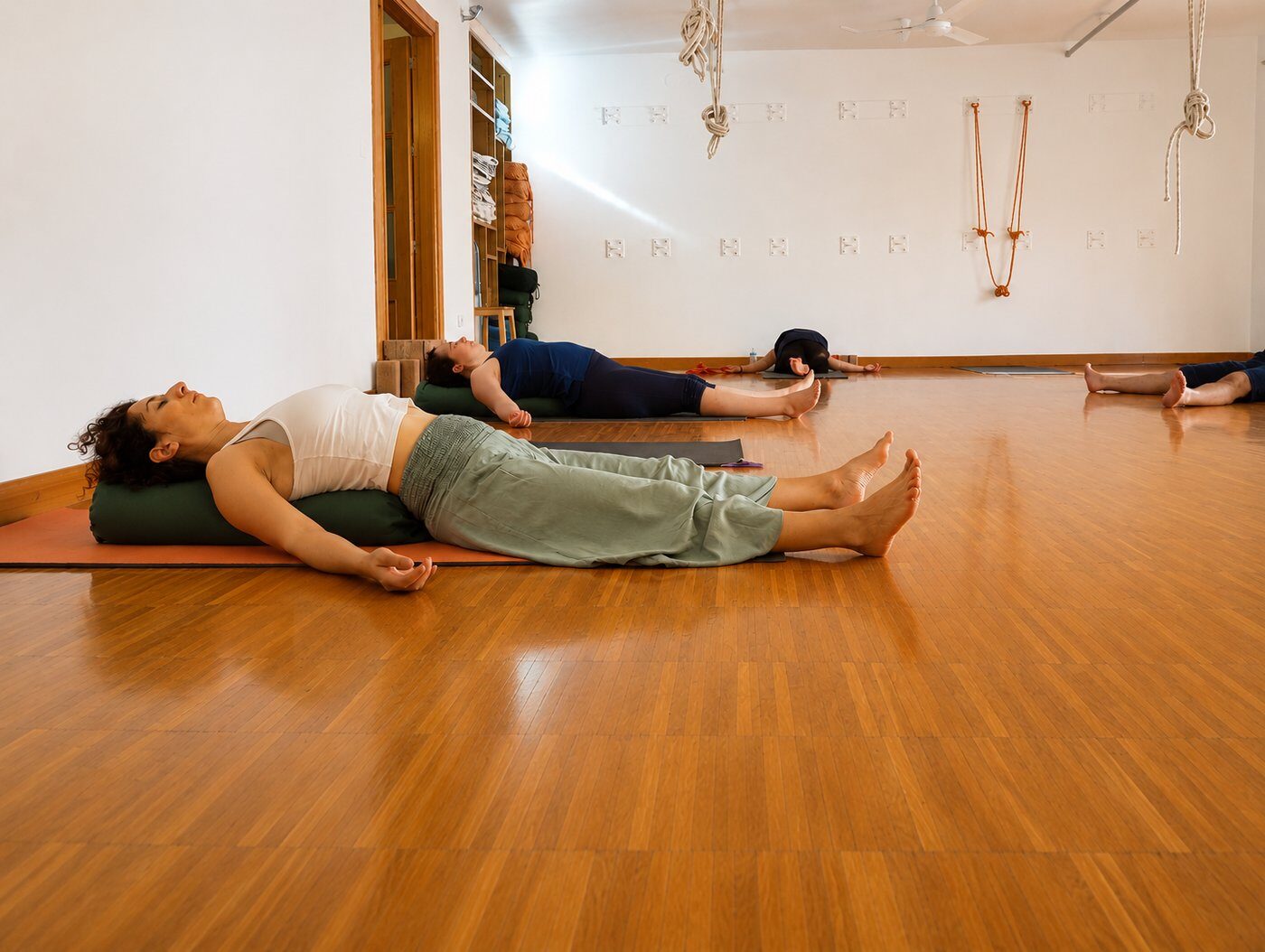
What it works
- CoreThe abdominal-lumbar girdle: the foundation for stability and balance in the rest of the body.
- Legs and glutesPostures like the warrior are combined with squats and lunges.
- Arms and upper bodyDownward dog, plank and weight-bearing holds strengthen shoulders, triceps and chest.
Who it's for
- Active mobilityNot just static flexibility: it's control of movement across its full range.
- Any levelAdapts from complete beginners to experienced practitioners. The intensity changes, not the approach.
- Fewer injuriesA body strengthened as a whole gets injured less in everyday life.
Adapted yoga
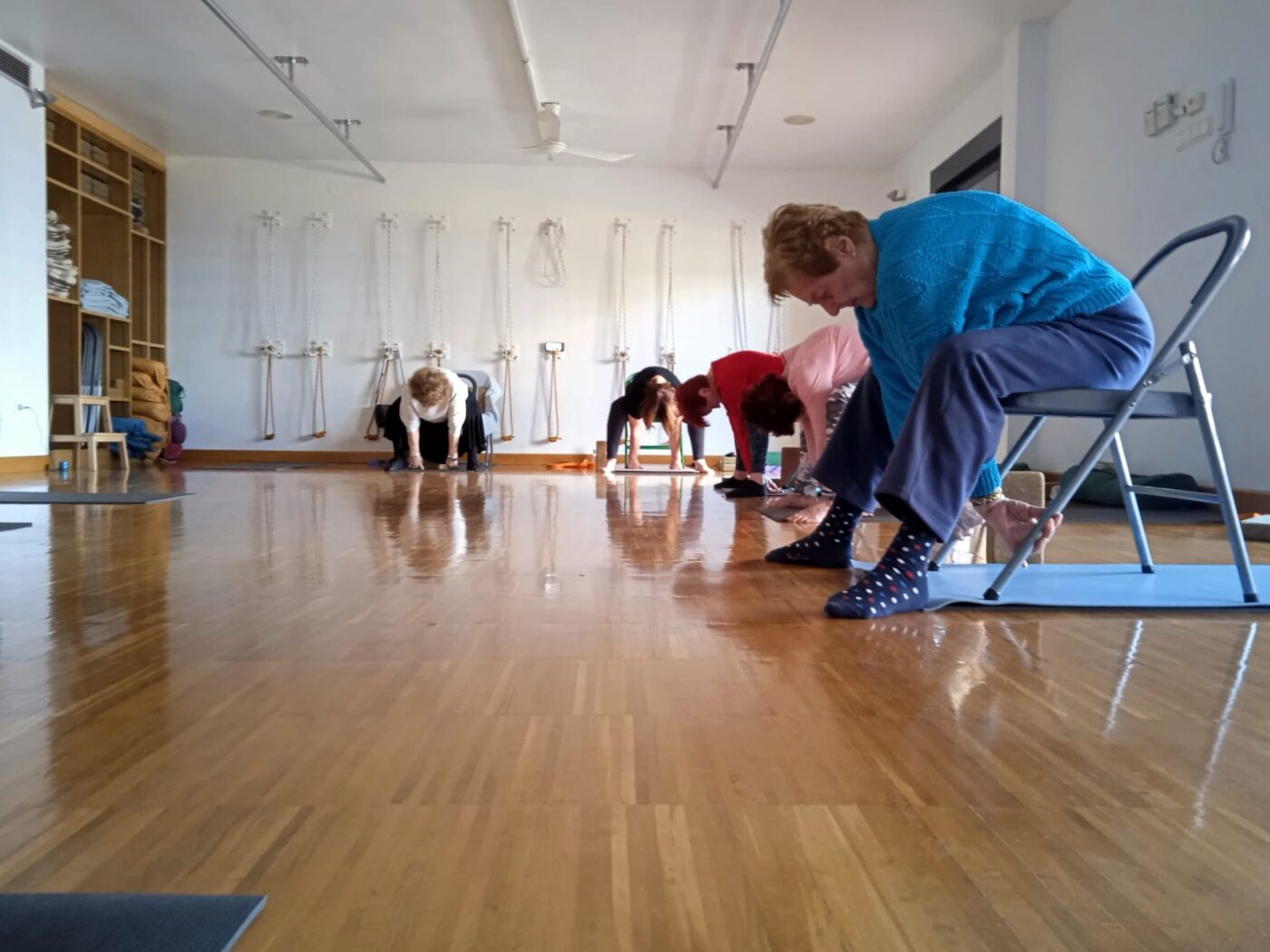
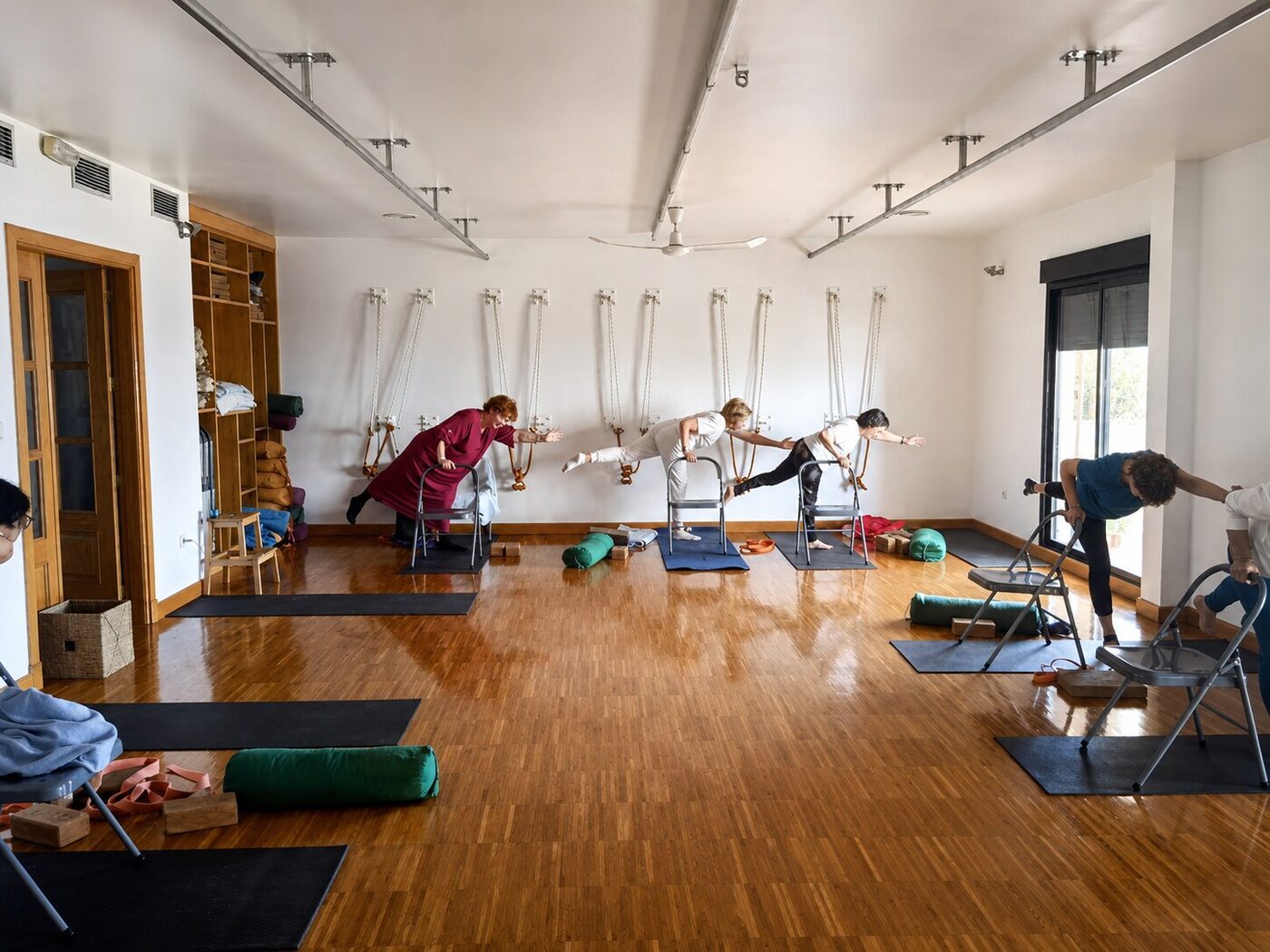
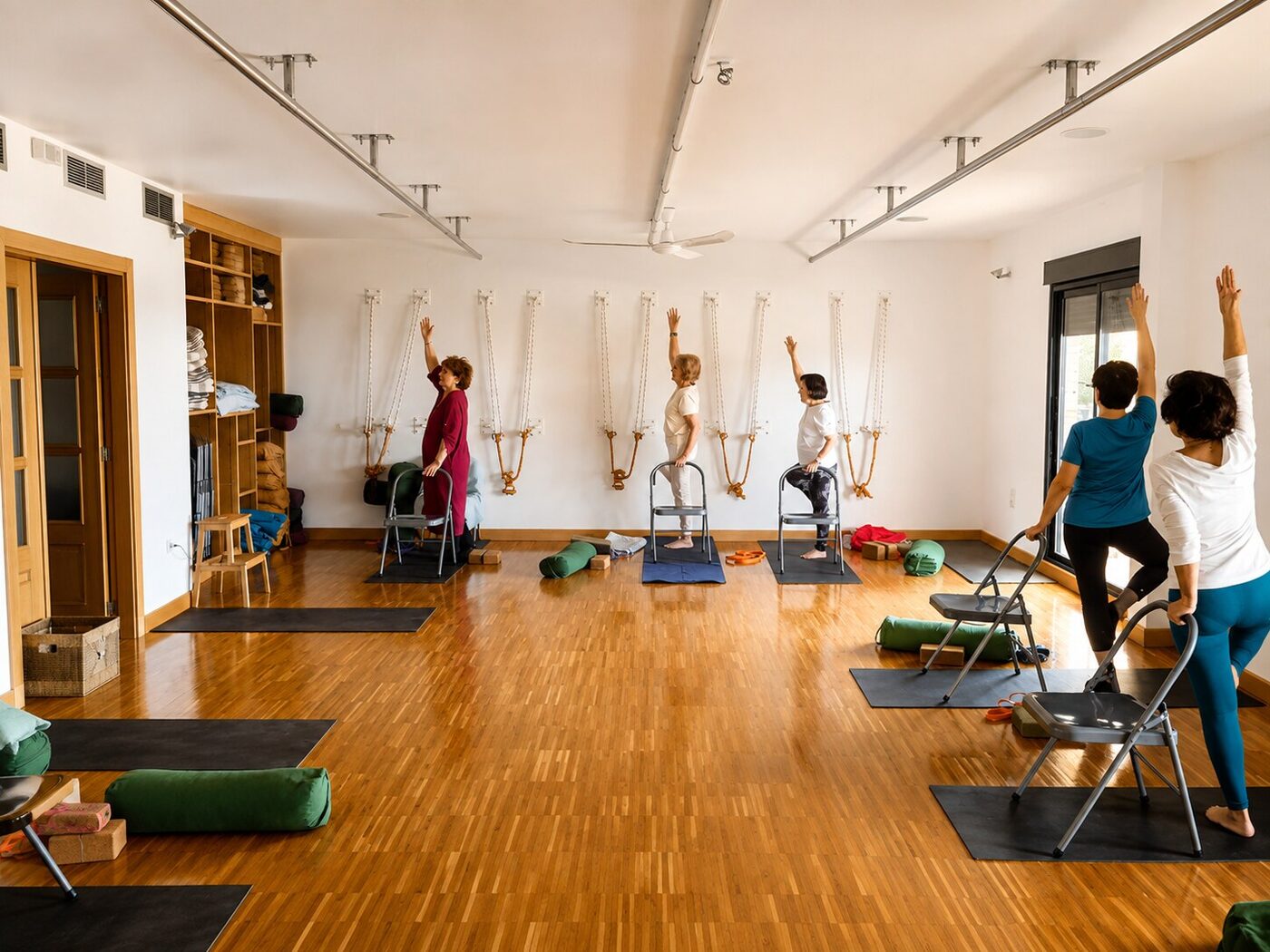
Monday 12:00–13:30Designed for people with reduced mobility or physical limitations. Each posture is adjusted to what each body can do on any given day, with the help of chairs, resistance bands, blocks and belts. There isn't one single version of a posture: there are as many as there are people in the room.
What's used
- ChairsTo practise standing, seated, or as support for balances.
- Bands and beltsExtend the reach of arms and legs without straining the joint.
- BlocksBring the floor closer when the floor feels far away.
Who it's for
- Older adultsThe pace and the support adjust to each body, with no rush.
- Recovery or physical limitationTemporary or permanent: the class adapts to the person, not the other way around.
- The same goalStrength, mobility and balance — the path changes, the goal doesn't.